PUNCH News & Nuggets

Mission Development articles | Outreach articles | Science articles | All articles (or Paginated)

Current front page items
2026-09-18 PUNCH Science Nugget

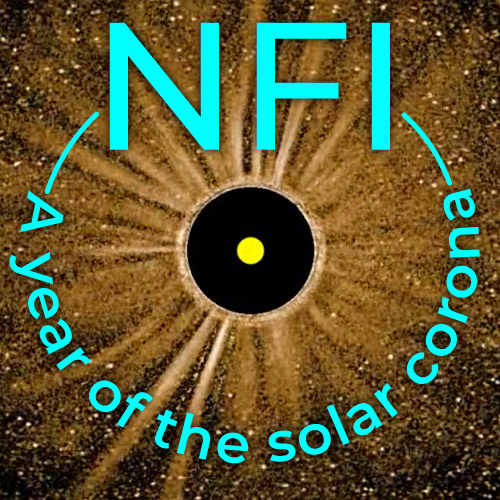
Recent image processing developments at the PUNCH Science Operations Center (SOC) have enabled recovery of photometric data from the Narrow Field Imager (NFI) coronagraph. NFI has been accumulating data throughout the mission, along with the more familiar Wide Field Imager mosaics, but is so strongly affected by bright, variable stray light that it has been omitted from the PUNCH mosaic data released in Versions 0a through 0l of the PUNCH preliminary data products. For the first time, Version 0m, in the process of being released, will include NFI photometric data in the mosaics.


2026-08-21

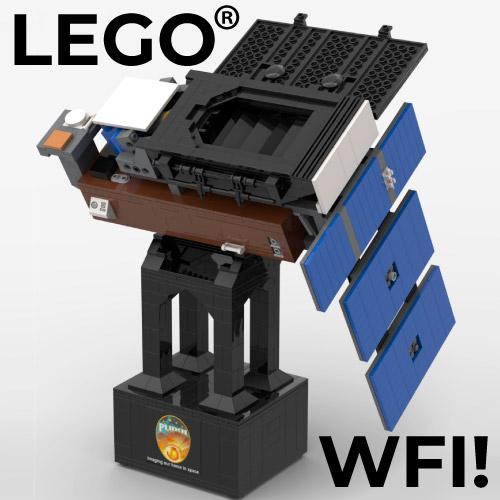
To help explain how the parts of our spacecraft work and fit together, we designed a LEGO® model of a PUNCH/WFI spacecraft. It is approximately 1:5 scale and over 1100 parts.


2026-08-07 PUNCH Science Nugget

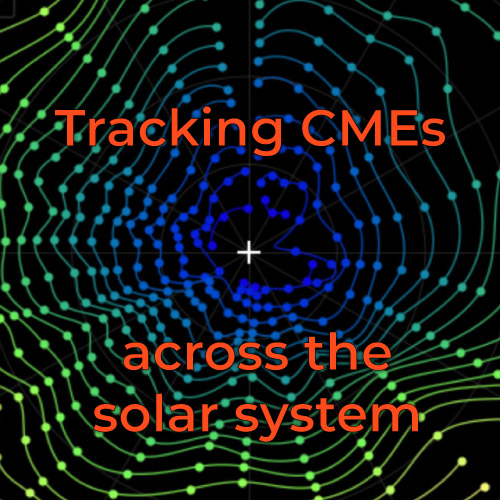
Forecasting space weather events is difficult, because space weather originates at the Sun, and most instruments only view near the Sun. Forecasting the arrival of a strong CME at the Earth requires extrapolating the behavior of the CME from the first 10% of its trajectory (in the corona), all the way across the inner solar system. PUNCH tracks Earth-directed CMEs across 45° or more of sky, following them for 80% of their trajectory instead of just the very beginning.


Archive
2026-07-22 PUNCH Science Nugget

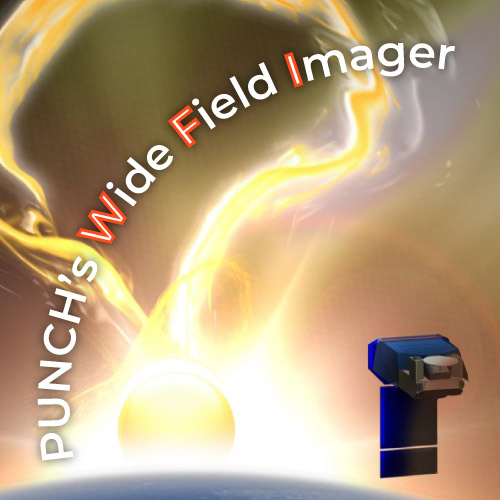
The Wide Field Imagers (WFIs) are the heliospheric imagers for NASA’s PUNCH mission. Three of them together image nearly the entire inner solar system in a single merged field of view. The WFIs were developed at Southwest Research Institute (SwRI) in Boulder, CO, and integrated with the PUNCH Spacecraft in San Antonio, TX, before launching on March 11th, 2025.


2026-06-26 PUNCH Science Nugget

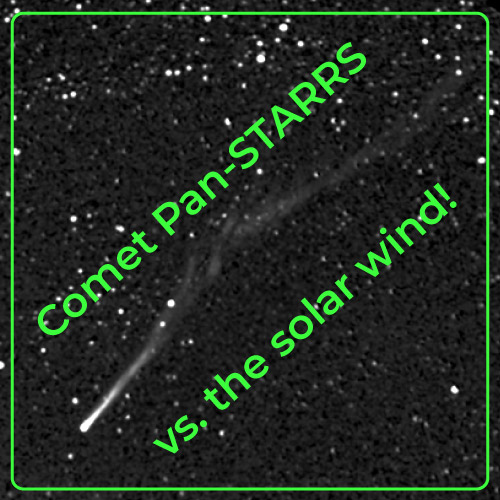
PUNCH observed an unusual breakup of a comet tail into spinning vortices, highlighting that the solar wind is a turbulent fluid, not just a “stream of particles” leaving the Sun. An 8-million-mile-long stretch of Comet Pan-STARRS’ tail transitioned from smooth flow to a series of evenly-spaced, spinning knots of material, each of which is 10x larger across than Earth itself, in just two hours. PUNCH’s continuous 8-minute coverage revealed the transition and subsequent evolution of the tail.


2026-06-15 PUNCH Science Nugget

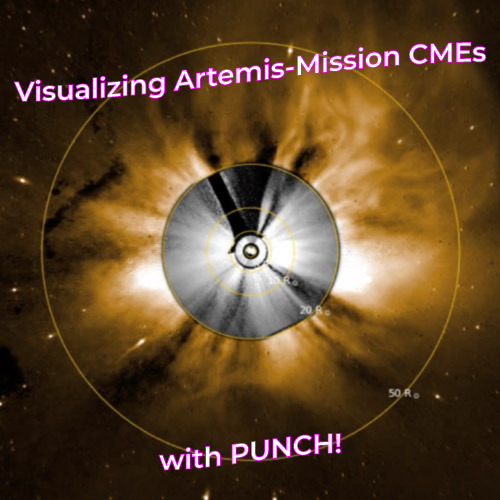
With PUNCH's gigantic field of view (90 degrees across!) we can now visually track solar storms as they move through the solar wind. Using that huge field of view requires new visualization tools. The images and linked movies above show a "halo" (Earth-directed) coronal mass ejection (CME) that produced a modest radiation storm mere hours after the Artemis II astronauts were launched from Kennedy Space Flight Center on their historic trip to return to the Moon. The left column of the four-image panel shows the fast-moving CME (850 km/sec, accelerating at 414 m/s^2) caught close to the Sun by the NSF/NCAR Mauna Loa Solar Observatory (MLSO) K-Coronagraph (K-Cor), the right column of the four-image panel shows the CME stretching across the fields of view of K-Cor, the NASA/SOHO/LASCO and NOAA/GOES/CCOR-1, and PUNCH, and the single, larger image shows the CME still moving across the PUNCH field of view in an extreme zoom-out from the Sun about thirteen hours after Artemis II launched at 22:35 UT on April 1, 2026. Solar radiation was closely monitored throughout the Artemis mission in order to warn astronauts to seek protection in case a large solar energetic proton (SEP) event occurred. Fortunately the SEP event associated with this CME was modest, falling just short of a S1 level radiation storm. Since SEPs can be accelerated throughout a CME's passage through the solar wind, PUNCH's global view may well prove critical for space weather situational awareness. Further observations and analysis of this event can be found at the MLSO Gallery page.

2026-05-14 PUNCH Science Nugget

With the support of the PUNCH Outreach program and NASA’s Heliophysics Education Activation Team, Service Unit 654 of the Girl Scouts of Central Maryland led a camping trip May 1-3 during which 165 Girl Scouts earned their Space Science badge and Ancient and Modern Sun-Watching patch. The badge and patch were earned over the course of the weekend through a series of activity stations. Girl Scouts of the USA have offered the Space Science badge series for kindergarten through twelfth graders since 2019. The Ancient and Modern Sun-Watching patch uses the PUNCH public Outreach products that are available for everyone and browsable at the PUNCH website, curated in the patch activities for the Girl Scout experience. This group of K-12 Girl Scouts are the first Girl Scouts ever to officially earn the Ancient and Modern Sun-Watching patch.


Display all 77 stories